Motorists say they face unprecedented pressure on the roads after traffic police were assigned a K22 billion revenue target for the 2026/27 financial year, a move critics warn could encourage heavier fines, aggressive enforcement and corruption as authorities push to meet ambitious collection goals.
The K22 billion projection represents 88 percent of the K25 billion the Ministry of Finance, Economic Planning and Decentralisation expects the Malawi Police Service (MPS) to remit to the national treasury.
Treasury expects the police to meet this target through traffic fines and other departmental receipts, including hiring out officers for private functions, licence fees, motor vehicle clearance charges and miscellaneous receipts.
The 2026/27 National Budget, presented by Minister of Finance Joseph Mwanamvekha last month, is pegged at K10.978 trillion, up from the revised K8.589 trillion in the 2025/26 financial year.
An analysis by Nation on Sunday shows the traffic police section has become a high stakes revenue stream after Treasury raised projections by 48 percent from K12 billion last year.
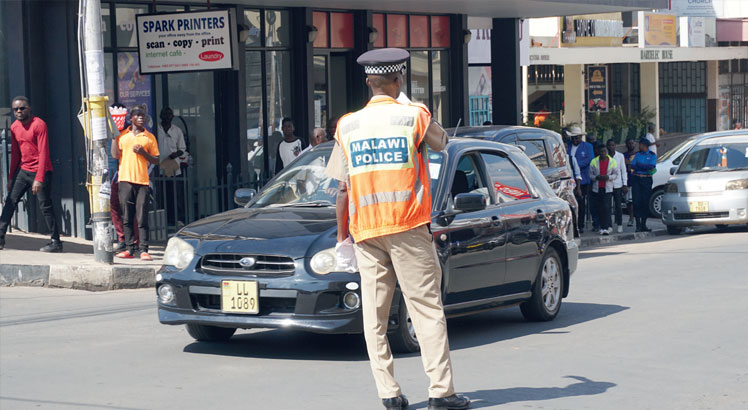
Stakeholders warn motorists will bear the burden as traffic officers intensify inspections and compliance checks to hit the new targets.
Transporters Association of Malawi spokesperson Frank Banda said the projection risks shifting enforcement priorities from road safety to revenue generation.
“The commercial transport sector is a backbone of the economy and already operates under significant cost pressures that could worsen with increased exposure to traffic fines,” Banda said.
“Enforcement strategies must prioritise road safety, fairness and economic stability.”
Banda said while the association remained committed to lawful and safe operations, traffic fines should not evolve into a primary fiscal instrument.
He said: “We acknowledge government’s intention to strengthen compliance. However, setting a high revenue target may unintentionally create operational pressure on enforcement officers.”
Professional Drivers Union of Malawi vice-general secretary McDonald Chilanga described the projection as unrealistic and warned it could further promote corruption among the traffic police officers.
He said the projection suggests traffic management is increasingly being used as a fiscal tool rather than purely a public safety function.
“The increase is insane because government is only looking at revenue collection. This will not pressurise traffic police officers, instead they are happy because many motorists will not afford to pay fines opting for informal settlement,” he said.
Passenger Welfare Association of Malawi (Pawa) president Don Napuwa said the projection amounted to an admission that corruption persists within the traffic police through informal settlements of fines.
He said the high target could translate into more frequent police stops and heavier penalties for motorists to meet the target that would disrupt passenger travel plans.
On his part, Consumers Association of Malawi executive director John Kapito believed the K22 billion target was modest compared to what traffic officers allegedly collect informally.
He said the figure was achievable without burdening motorists if strict control mechanisms were enforced to curb corruption and ensure transparency in collections.
Kapito said the target would not necessarily translate into higher fines because motorists are aware of traffic regulations and can protect themselves through compliance.
Said Kapito: “This figure is too small and can be collected within a short period. It is important for motorists to know the offenses and their penalties. We are only asking the police to be diligent and desist from corruption and motorists to be extra careful on the road by using roadworthy cars.”
US-based lawyer and financial analyst Rackson Chipili said the projection is unrealistic, untenable and very aggressive unless supported by structural reforms.
He said revenue from fines “typically grows incrementally and not exponentially” and the jump is not natural for such kinds of revenues.
“The police would need to increase or put in place new measures or strategies. Fines are not a stable revenue base like taxes,” he said.
National Police deputy spokesperson Alfred Chinthere said: “We cannot discuss our operation strategy in the media.”
Other police revenue streams remain comparatively small, but are also projected to rise, with hiring out of officers expected to increase from K1.20 billion to K1.82 billion.
Licence fees are projected to grow from K230.0 million to K349.9 million while motor vehicle clearance charges will rise from K383.3 million to K583.2 million.
Miscellaneous receipts are also expected to increase from K18.4 million to K28.0 million, maintaining the upward trend across smaller revenue lines within the police structure.
For the 2025/26 financial year, the traffic police section is expected to exceed its target with collections projected to reach K14.6 billion against an approved K12.1 billion.
“We will now face the reality of being hunted for the smallest infractions from a slightly faded reflector to a cracked indicator, all to fill a K22 billion hole in the budget.
“This is not a national budget issue, but a looming confrontation between the police and government on one hand on their hunger for maximum revenue and motorists on the country’s roads,” said 26-year-old minibus driver Ray Phalula of Blantyre.